

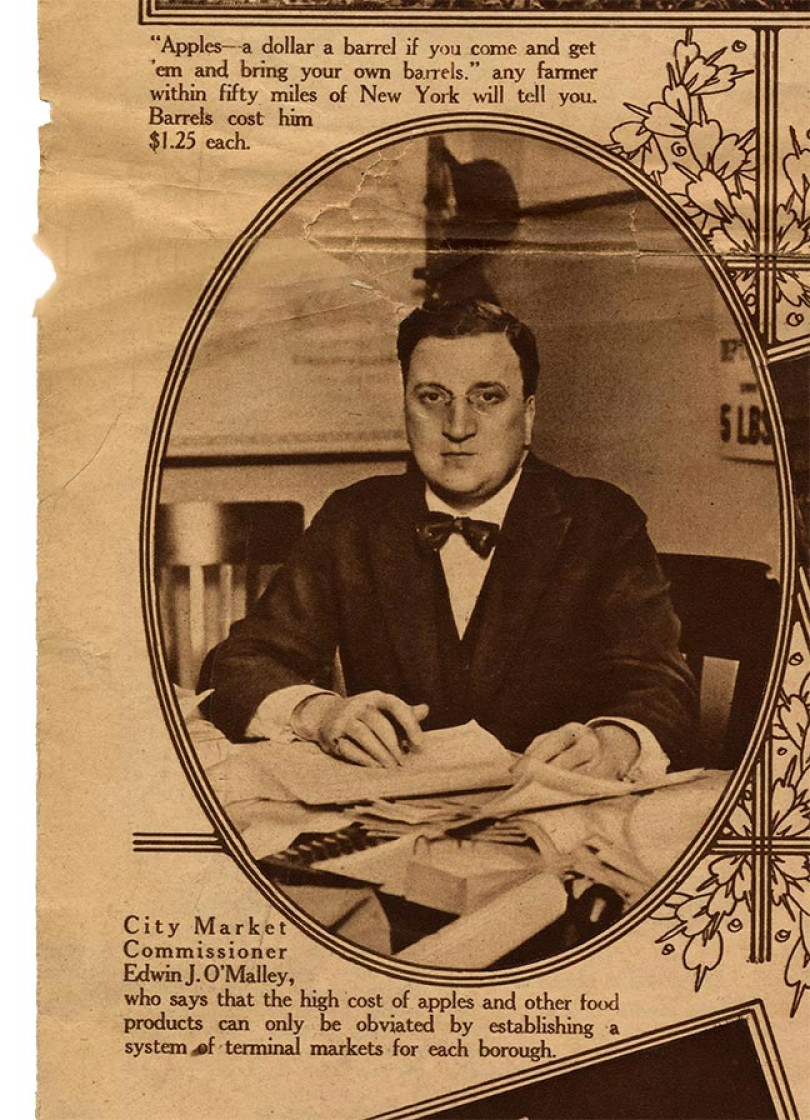
November 28, 1920 clipping from The World newspaper of Edwin J. O'Malley serving in the appointed position of Commissioner of Public Markets in New York under Mayor John Hylan.
Edwin J. O’Malley:
Family
In 1923, four years into his appointment as Commissioner of Public Markets, Edwin J. O’Malley was recognized for helping the greater community of New York with lowering food costs and abundant supplies. O’Malley, the father of Walter O’Malley, was appointed to the position by New York Mayor John Hylan from 1919 through 1926.
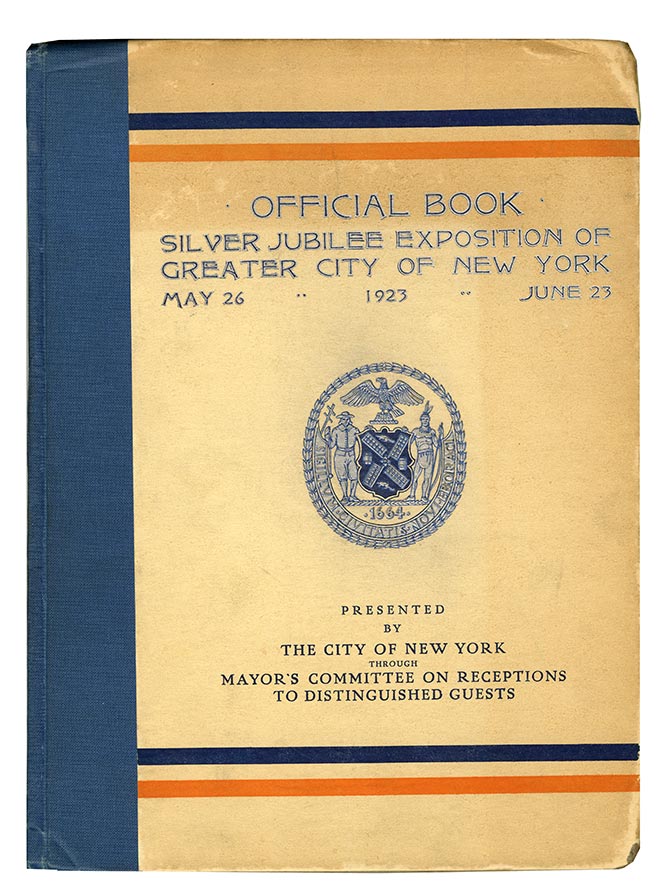
Cover of the “Official Book, Silver Jubilee Exposition of Greater New York, May 26-June 23, 1923”. Edwin J. O’Malley, Commissioner of Public Markets for New York, is mentioned several times in the book, including as marching in the May 26, 1923 Silver Jubilee Parade down Fifth Avenue in New York City, as well as a member of the general committee for the Silver Jubilee Celebration.
In “Official Book: Silver Jubilee Exposition of Greater City of New York, May 26-June 23, 1923”, published that same year several pages mention Edwin and the Public Markets and his involvement in the month-long festival and celebration. Edwin is mentioned on the General Committee, as well as the Exposition and Parade Committee and as a participant in the May 26, 1923 Parade on Fifth Avenue through New York.
In the chapter on Public Markets, the purpose of the department is explained: “The Department holds jurisdiction over all market places and lands, all vehicles used in the vending of foodstuffs, all push-carts, all auctioneers of food, the inspection and maintenance of the same and the issuance of permits and leases to all those dealing in food.”
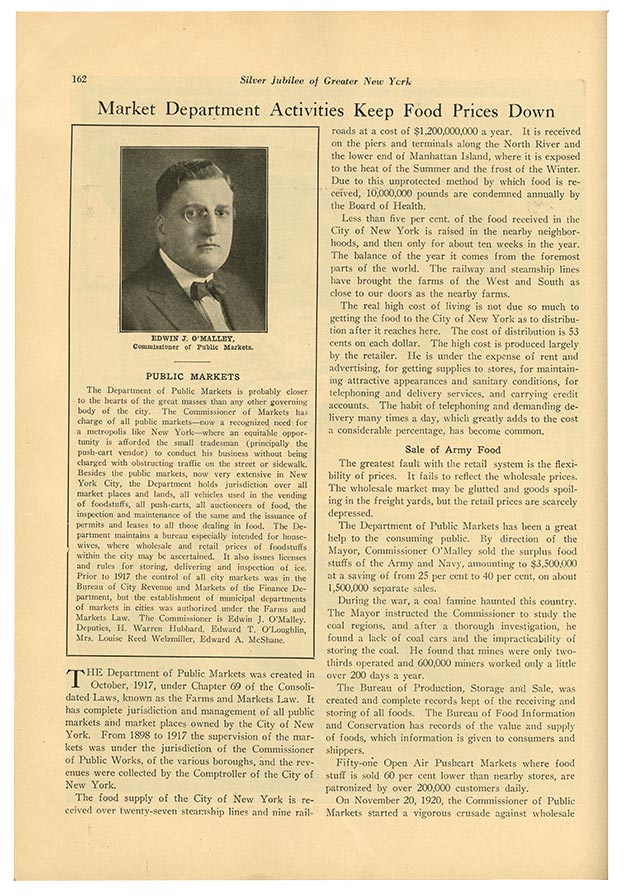
Edwin J. O’Malley is highlighted for his role as Commissioner of Public Markets for New York in the “Official Book, Silver Jubilee Exposition of Greater New York, May 26-June 23, 1923”. The three-page section describes Commissioner O’Malley’s diligence in keeping prices low and supplies flowing to New York City.
Continuing in the chapter regarding Edwin J. O’Malley’s leadership, “On November 20, 1920, the Commissioner of Public Markets started a vigorous crusade against wholesale and retail Bakers for the increased cost of bread and due to this activity prices were reduced. On May 18, 1922, an order was issued by the Pennsylvania Railroad changing the delivery of potatoes from Pier 29, North River, where they had been handled for two generations, to a new terminal at Kearney, NJ. The Commissioner protested against this embargo, and a special meeting of the Board of Estimate and Apportionment was called. A hearing was also had before the Interstate Commerce Commission at Washington, D.C. The embargo was lifted and potatoes were not diverted.
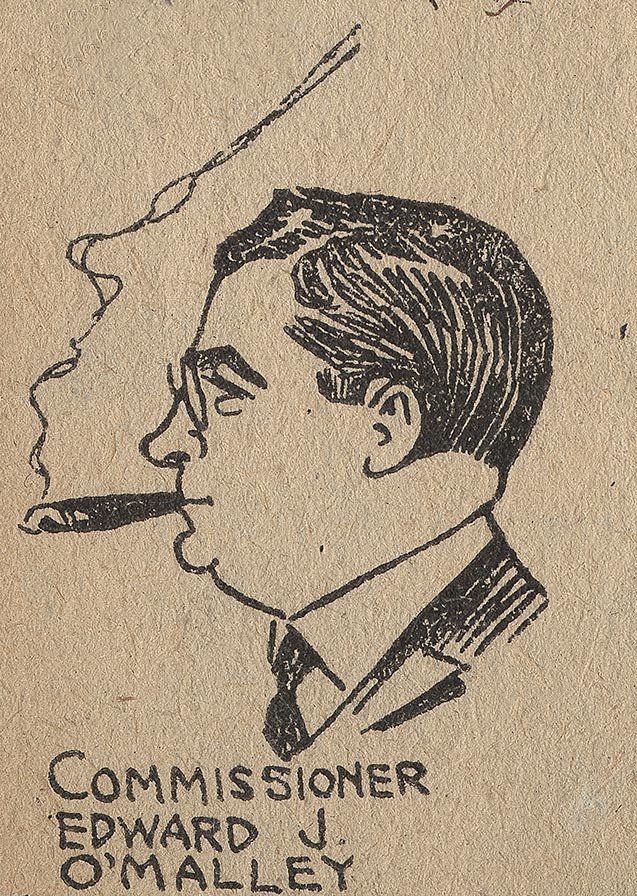
Caricature of Edwin J. O’Malley, Commissioner of Public Markets for New York, circa 1920s.
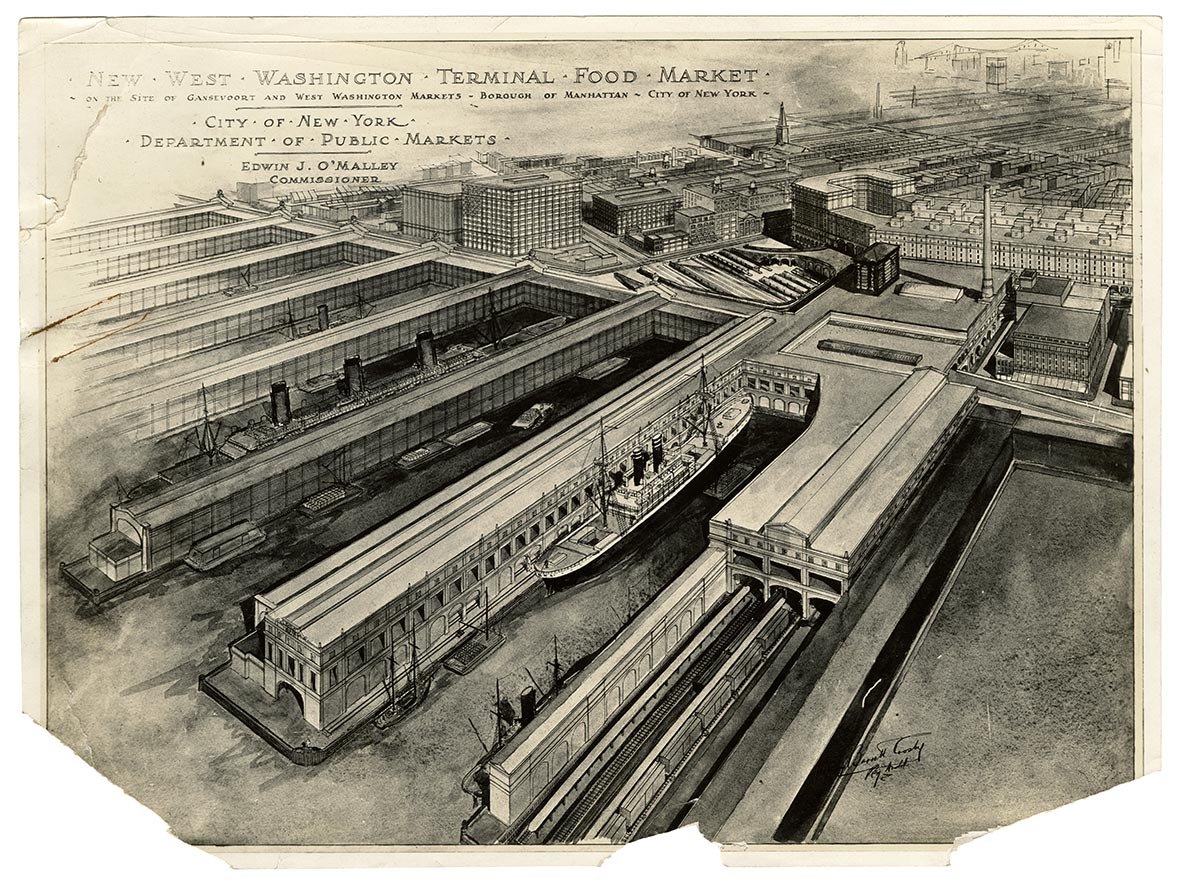
Architectural drawing of New West Washington Terminal Food Market supervised by Commissioner of Public Markets Edwin J. O’Malley, father of Walter O’Malley, circa 1920s.
“In September, 1922 an embargo was placed by all railroads, bringing perishable foods into New York. This was objected to by the Commissioner of Public Markets. A hearing was held before the Interstate Commerce Commission at Washington, D.C., and it was shown that the real cause for the refusal of the railroads to deliver food in New York was not a lack of terminal facilities, but the breaking down of the motor power of the railroads, because the railroads attempted to operate with non-union labor. This embargo was lifted, and the railroad strike settled, due to this expose.”
At Mayor Hylan’s direction, O’Malley also was responsible for selling “the surplus food stuffs of the Army and Navy, amounting to $3,500,000 at a saving of from 25 percent to 40 percent, on about 1,500,000 separate sales.”
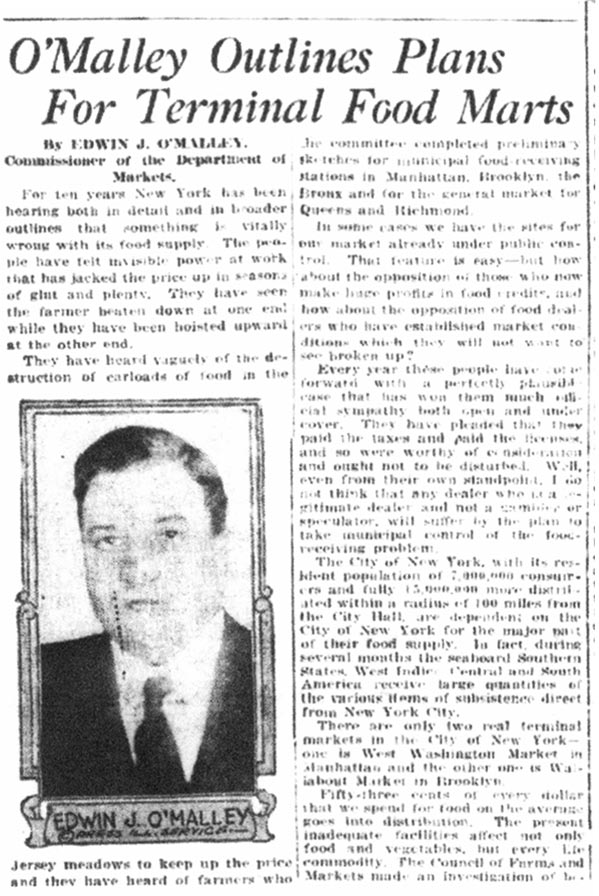
Headline and article written by Edwin J. O’Malley from the March 6, 1921 Brooklyn Eagle.
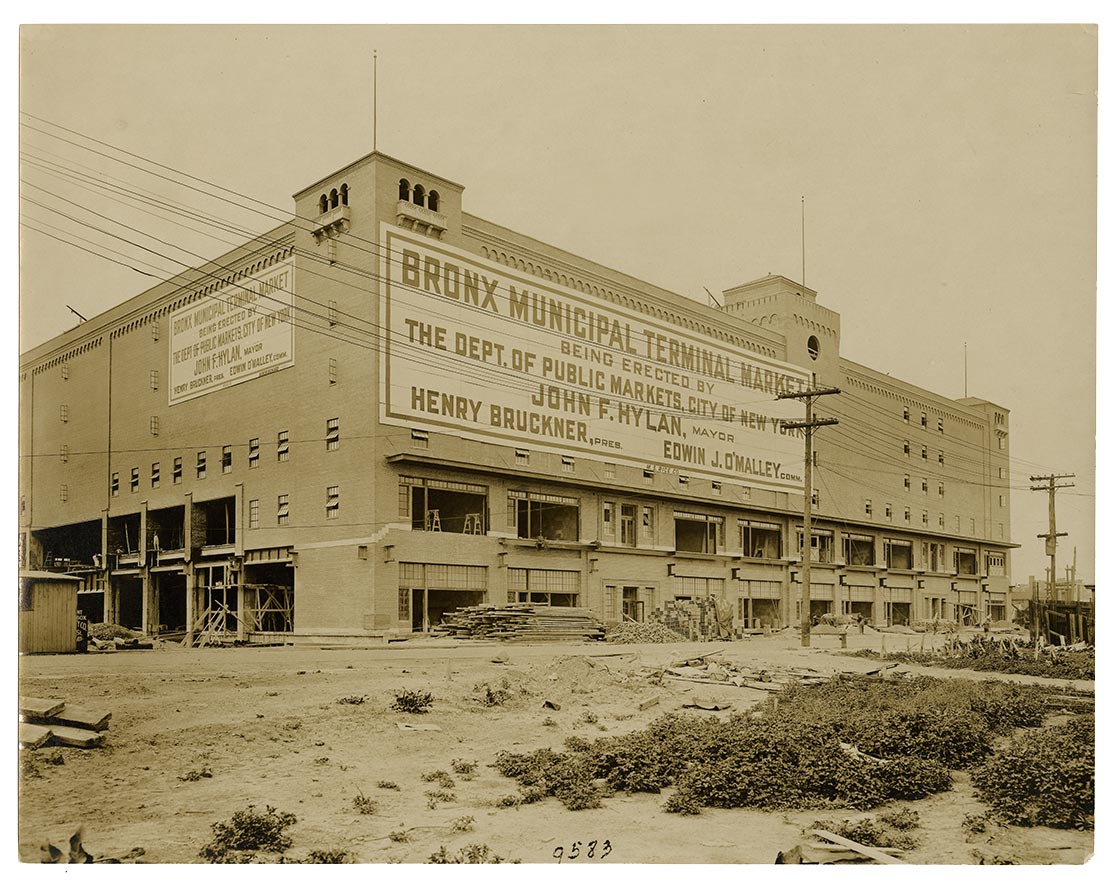
Construction as of April 28, 1925 for Bronx Municipal Terminal Market directed by Commissioner of Public Markets Edwin J. O’Malley.
Edwin was a proponent of large-scale food-receiving and distribution centers with the city. According to his 1953 obituary, “Many officials and civic leaders during the first quarter of the century shared his belief in the desirability of such centers as a means of achieving greater efficiency in food handling and reducing food prices.”
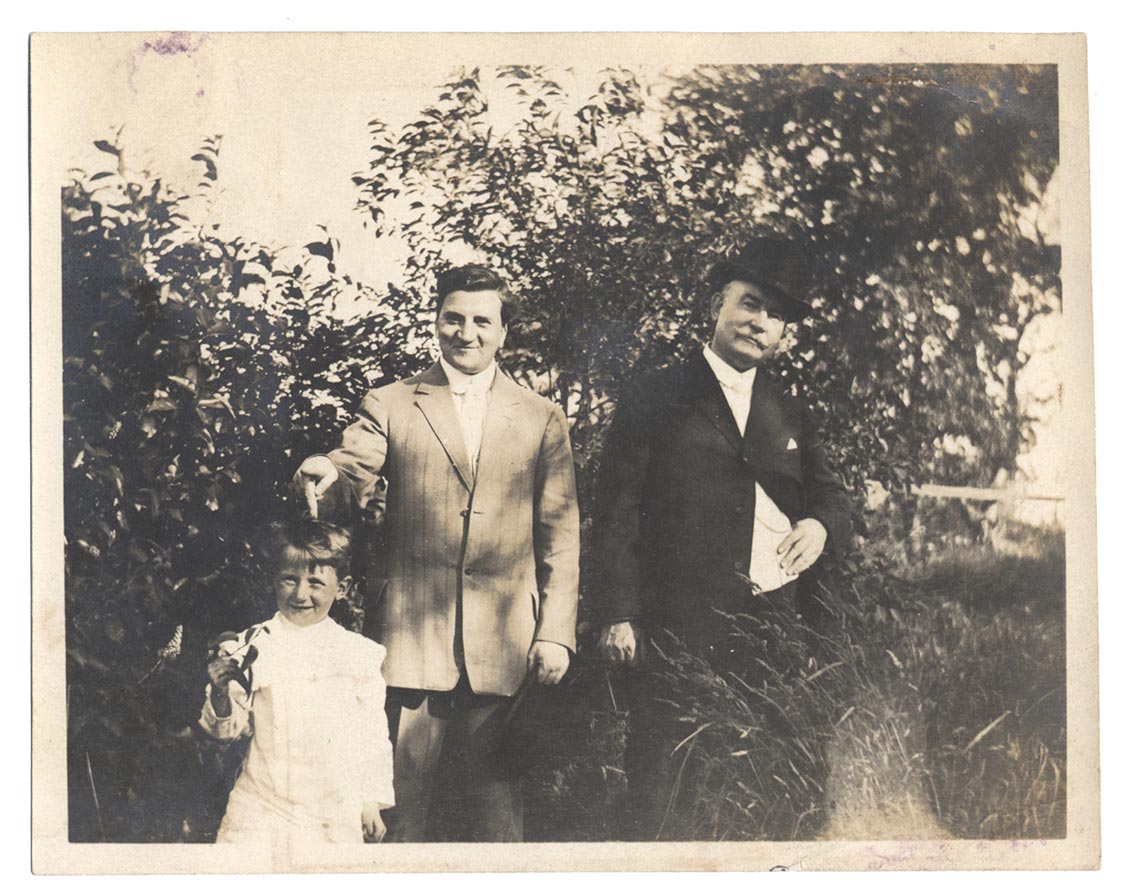
Three generations of O’Malleys are shown, circa 1908, (L-R): Walter O’Malley, his father Edwin J. O’Malley, and his grandfather, Thomas Francis O’Malley.
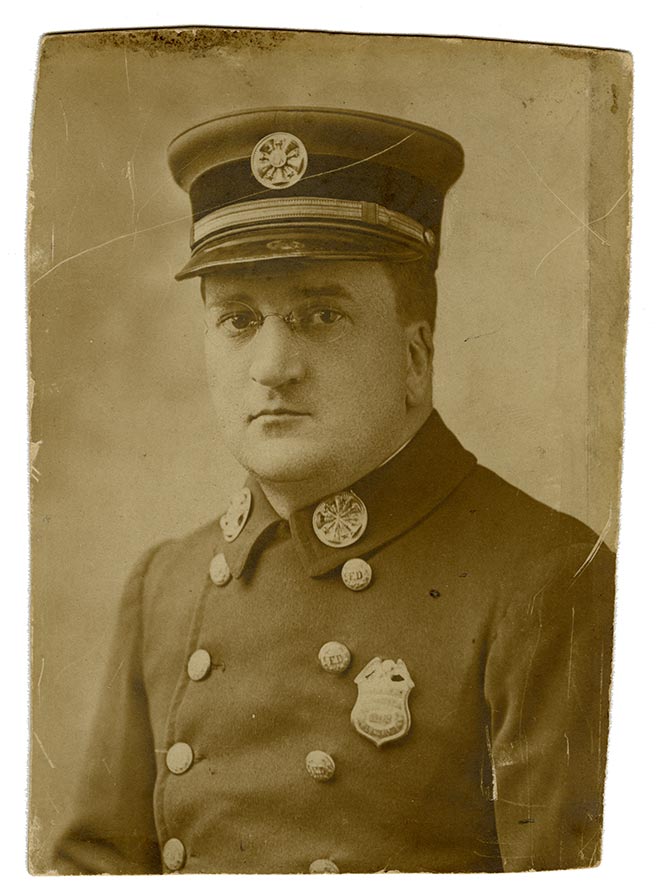
Edwin J. O’Malley, circa early 1910s, is the father of Walter O’Malley who served as chief of the Hollis Volunteer Fire Department in Queens, New York.
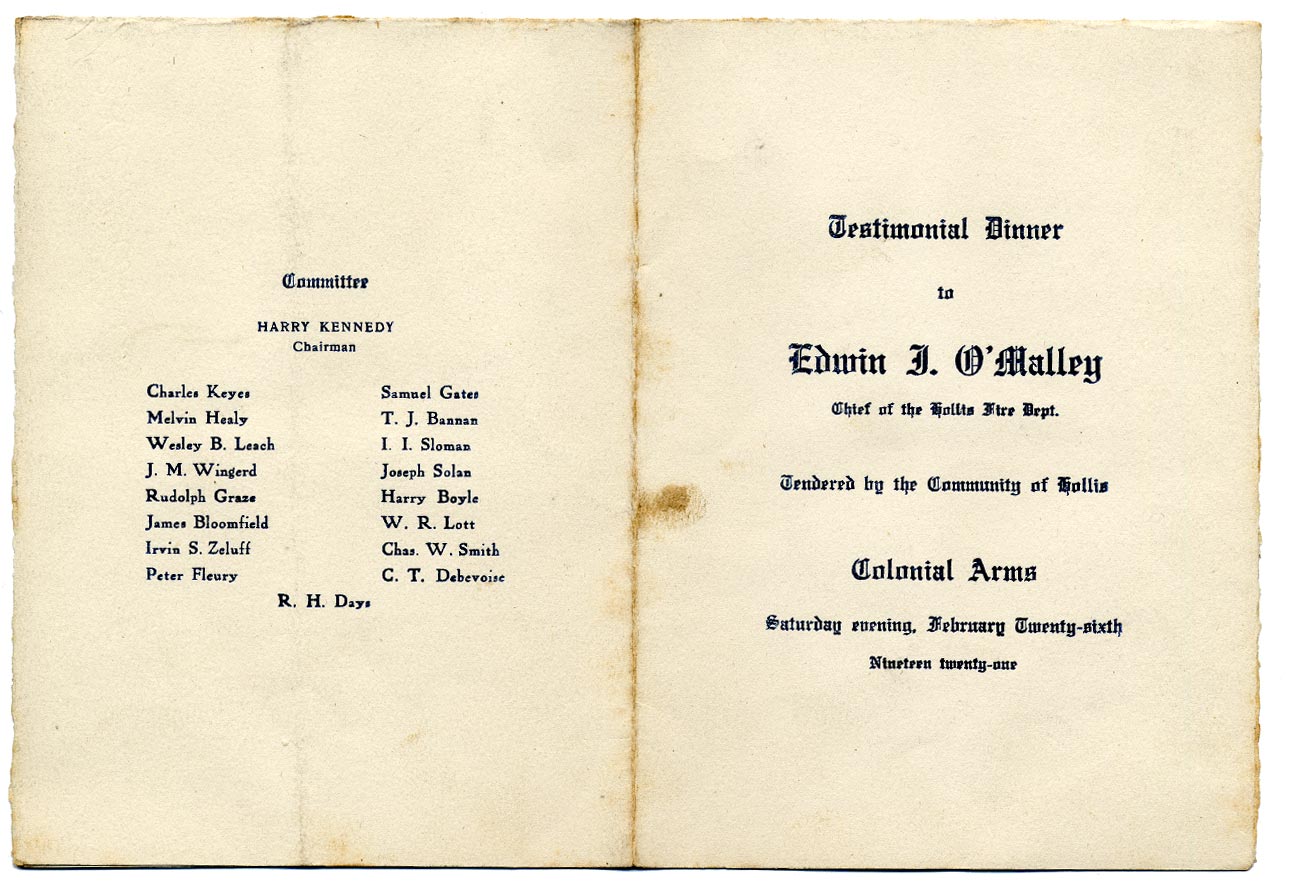
February 26, 1921, testimonial dinner program honoring the highly-respected Edwin J. O’Malley, chief of the Hollis Volunteer Fire Department in Queens, New York.
Edwin was born on August 23, 1882, the fourth of eight sons of Georgiana Reynolds and Thomas Francis O’Malley, and one of their 14 children. Edwin was a founder and director of the Grand Street Boys Association, a past president of the Hollis, Queens Civic Association, chief of the Hollis Volunteer Fire Department, and a life member of the Elks Lodge 878, Queens.
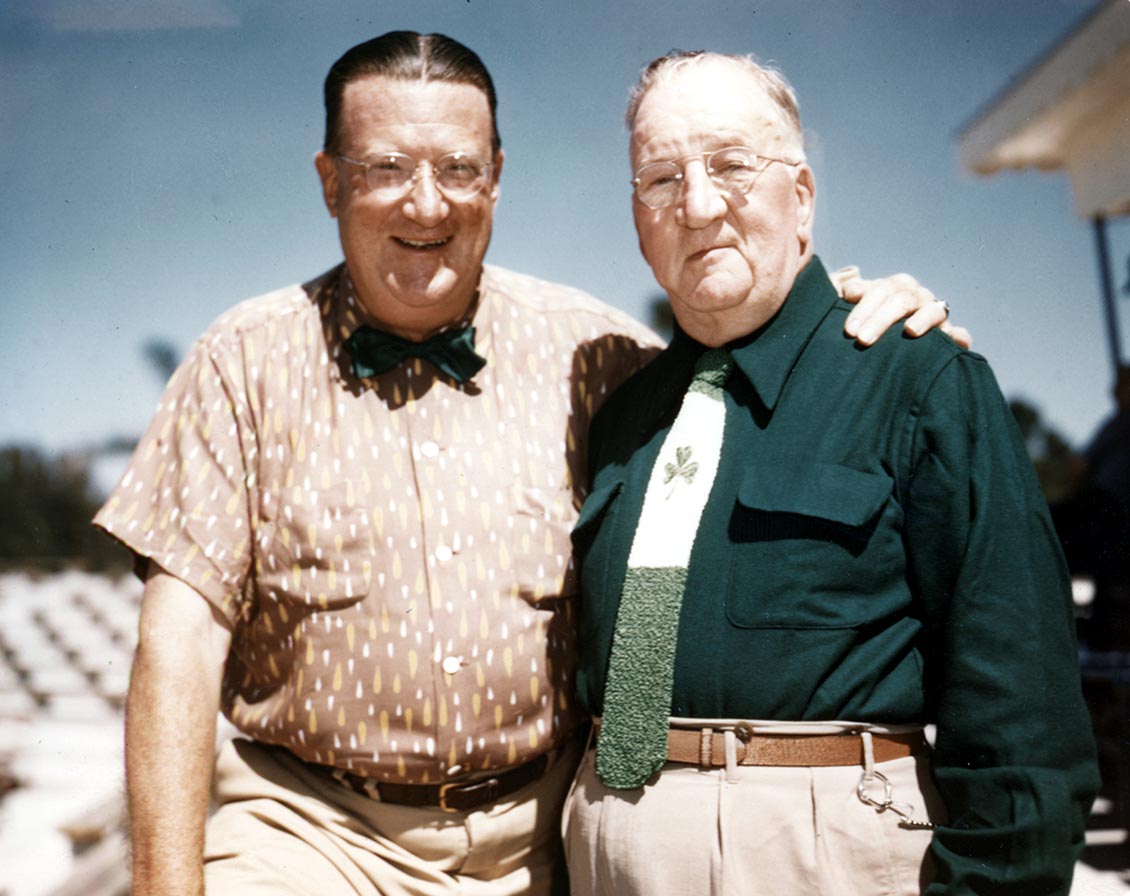
Walter O’Malley and his father Edwin celebrate St. Patrick’s Day 1953 at newly-opened Holman Stadium, Dodgertown, Vero Beach, Florida.
He passed on April 10, 1953 at home in New York City, a few weeks after visiting Dodgertown, Vero Beach, Florida to see newly-opened Holman Stadium, privately built by Walter O’Malley, and he enjoyed the annual St. Patrick’s Day party.