

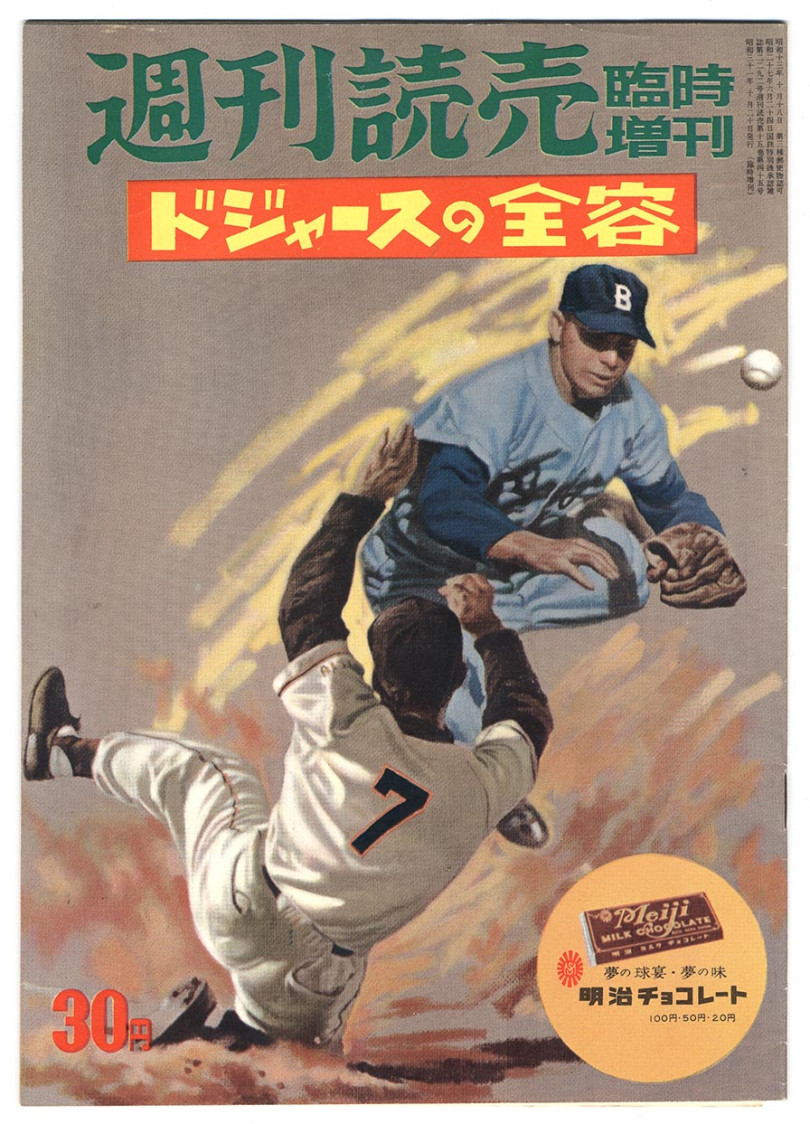
Dodger shortstop and team captain Pee Wee Reese graces the artwork for the program cover of the 1956 Dodgers Goodwill Tour to Japan.
Feature
70 Years Ago, the Dodgers and Japan Friendship Began
Seventy years ago, the Brooklyn Dodgers embarked on a 19-game Goodwill Tour to Japan, playing professional teams and combined All-Star clubs. Upon their arrival in Tokyo, a half million fans lined the streets and braved the rain to welcome the Dodgers. Though one of several tours by an American major league team to Japan, the 1956 Dodger trip remains the most significant one in history.
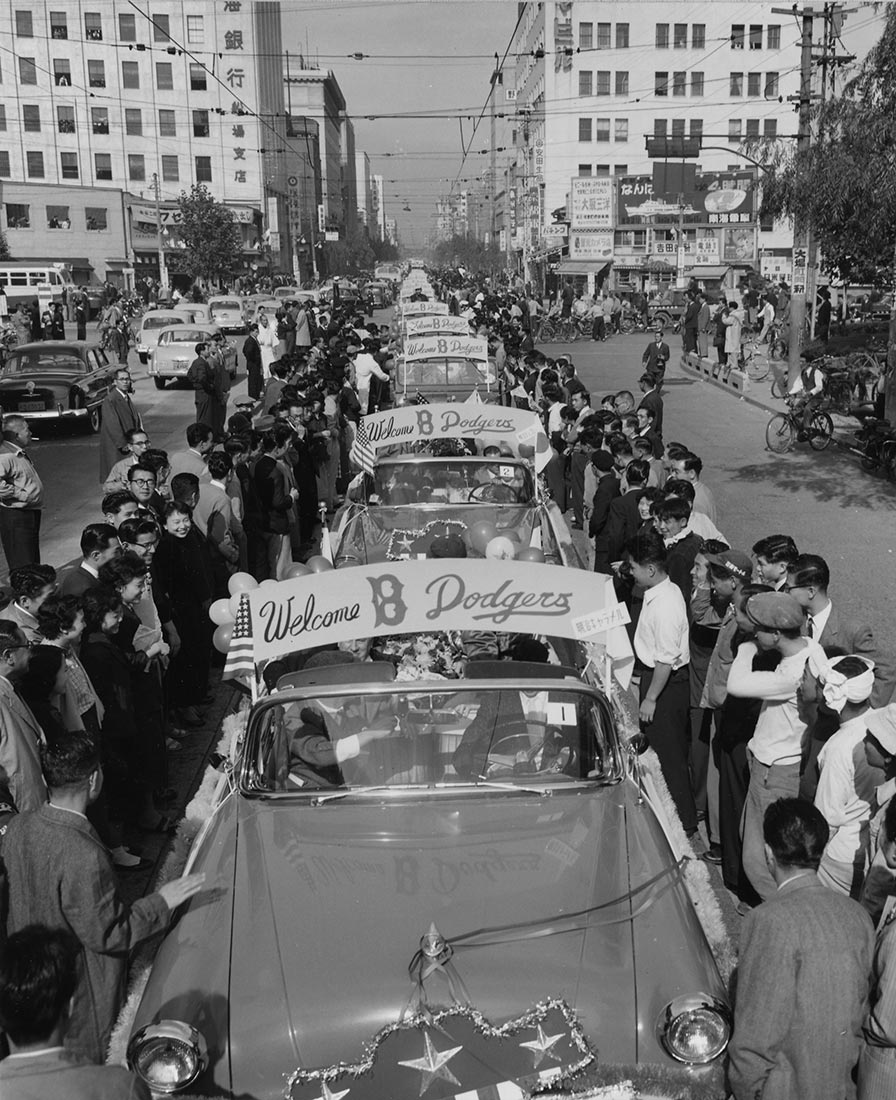
The popular Dodgers received a warm welcome from fans in every city and along the countrysides in Japan. This is one of the parades during the 1956 Dodgers Goodwill Tour to Japan.
The Wall Street Journal ran an article on May 9, 2016 with the headline, “Sixty Years Ago, the Dodgers Toured Japan and Changed Baseball Forever.” The article by Brad Lefton focuses on the friendship that started between the O’Malley family and the Tokyo Yomiuri Giants during that month-long trip and the numerous cultural exchanges afterwards creating stronger bonds between the countries.
The O’Malley family – Walter, Kay, Terry and Peter – enjoyed the tour and making new friends in Japan. For teenager Peter, he saw how baseball had a universal appeal and could bridge countries. Eventually, those longtime friendships would lead to Peter’s 1995 Dodgers signing of pioneer pitcher Hideo Nomo, the first Japan-born player to participate in Major League Baseball in 30 years. Since National League Rookie of the Year Nomo opened the door, more than 80 Japan-born players (as of 2026) have followed, directly linking him with such superstars as Hall of Famer Ichiro Suzuki, Hideki Matsui, Yu Darvish, Shohei Ohtani, Yoshinobu Yamamoto, among others.
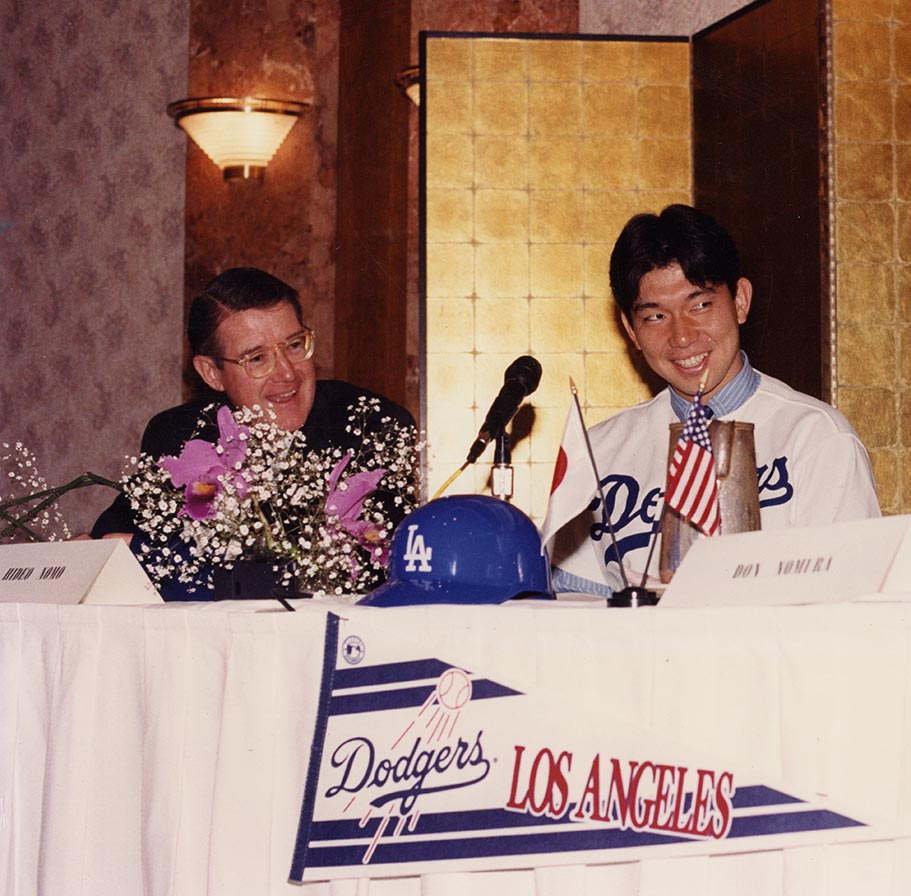
February 13, 1995, New Otani Hotel, Little Tokyo, Los Angeles. The Dodgers’ press conference to introduce pioneer pitcher Hideo Nomo is a happy occasion with (l-r) Dodger President Peter O’Malley and Nomo on the dais. O’Malley’s longtime friendships in Japan led to the signing of Nomo. His success in the major leagues opened the door for many more Japan-born players to follow him.
International baseball was on Walter O’Malley’s mind. In 1952, he proposed a world tour with the American League’s Cleveland Indians stopping in Japan, India, Egypt, Australia, Philippines and Hawaii which never came to fruition. But, O’Malley was able to work out the details for the 1956 Dodgers Goodwill Tour on the invitation of the Tokyo Yomiuri Giants. Early in 1956, Matsutaro Shoriki, the founder-owner of the Giants and the “father of professional baseball in Japan”, dispatched his baseball ambassador Sotaro Suzuki to New York to invite the Dodgers to visit Japan in the fall of 1956. The Dodgers had won their first World Championship in 1955 against the New York Yankees. With support from the players and the U.S. Department of State, O’Malley accepted the invitation and the start of the friendship with Yomiuri and columnist Suzuki, a Japan Baseball Hall of Famer, was cemented.
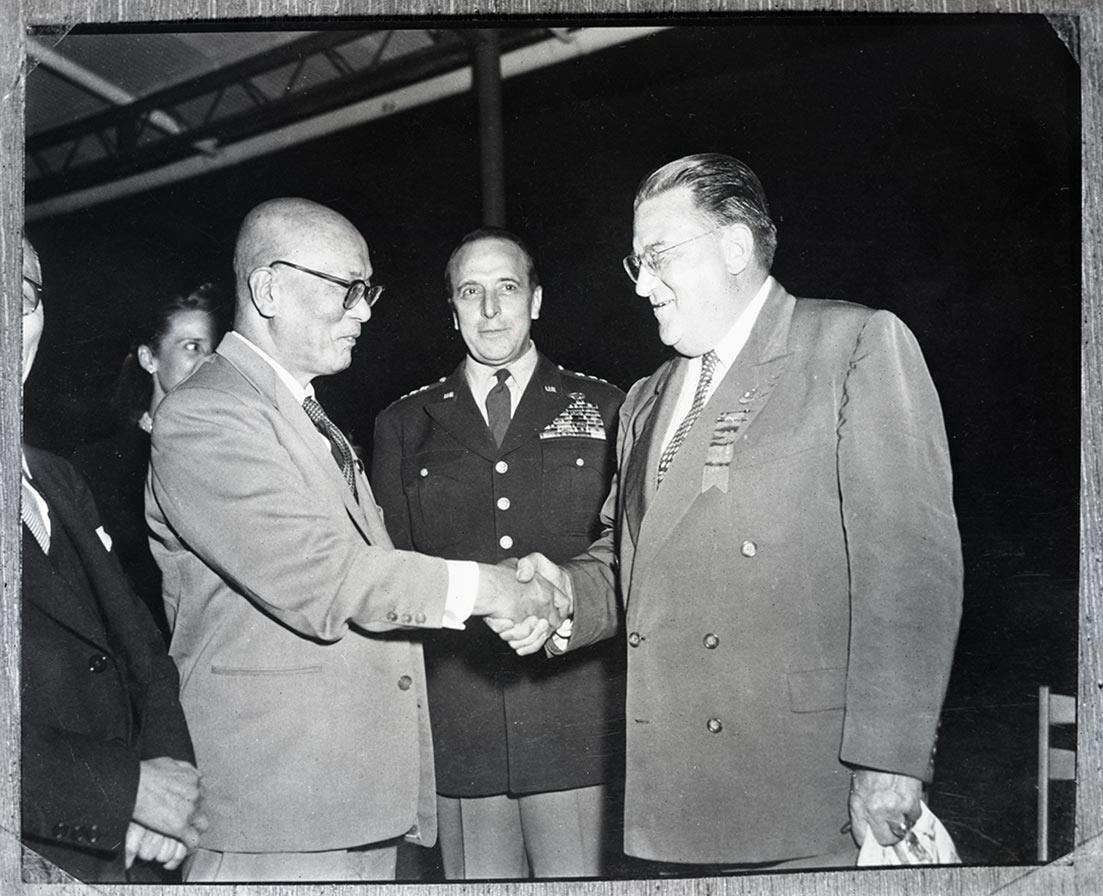
In 1956 during the Dodgers Goodwill Tour to Japan, Matsutaro Shoriki, the “father of professional baseball in Japan” and owner of the Yomiuri Shimbun (left), greets Dodger President Walter O’Malley, as U.S. Army General Lyman Lemnitzer looks on.
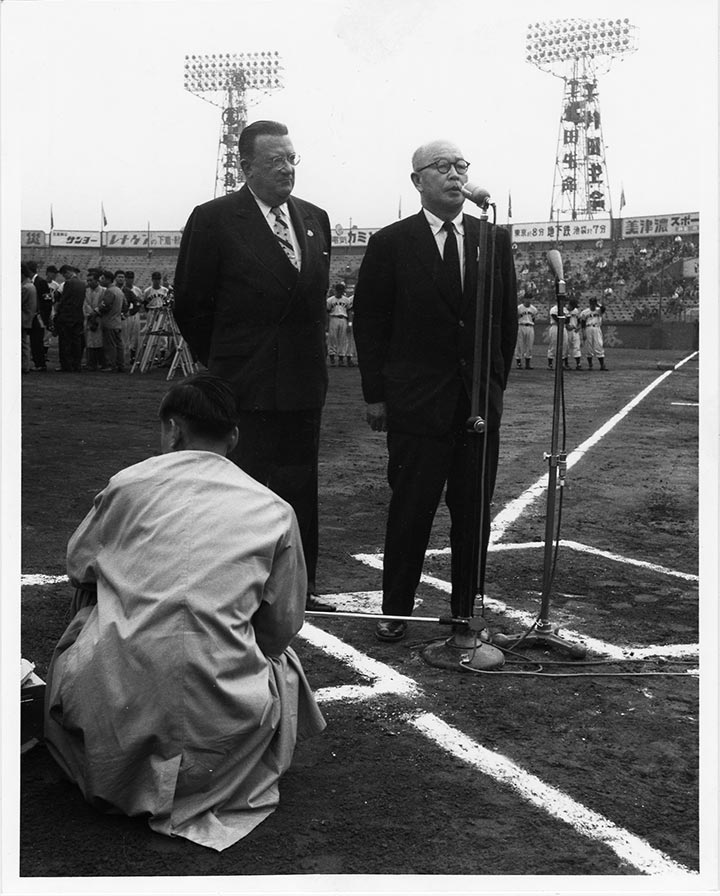
(L-R): Dodger President Walter O’Malley stands with Sotaro Suzuki, columnist and baseball ambassador for Yomiuri, at Korakuen Stadium, Tokyo during the 1956 Dodgers Goodwill Tour.
On October 19, 1956, the Dodgers opened their Japan schedule at Korakuen Stadium in Tokyo with a 5-4 loss, but they bounced back the next day to defeat Japan’s Central League All-Stars, 7-1. The Dodgers were a weary bunch after a long season and travel, but they ended up with a 14-4-1 tour record. Baseball fans in Japan were excited to watch the marquee names of the Dodgers play in their home country. Hall of Famers from the Dodgers on the field during the tour included: Jackie Robinson (who made his last appearance in a Dodger uniform in Japan), Pee Wee Reese, Gil Hodges, Roy Campanella, Duke Snider, Don Drysdale, Dodger Manager Walter Alston, Dodger Coach Billy Herman, and National League umpire Jocko Conlan. Hall of Famers off the field were Dodger President Walter O’Malley and broadcaster Vin Scully.
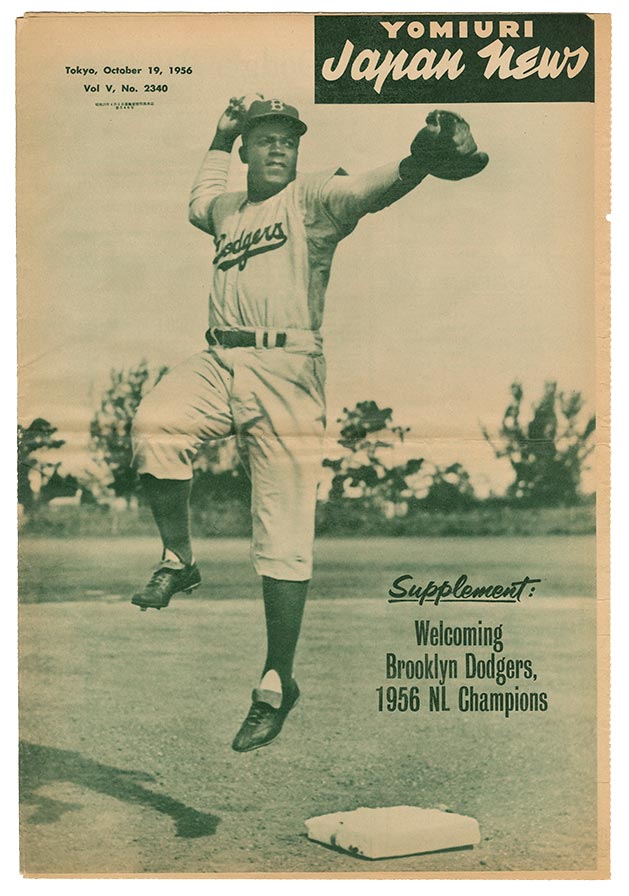
Dodger great Jackie Robinson is featured on the cover of Yomiuri Japan News, a supplement of the Yomiuri Shimbun as the Dodgers began their 1956 Goodwill Tour on October 19. Robinson is shown at Field No. 2 in Dodgertown, Vero Beach, Florida.
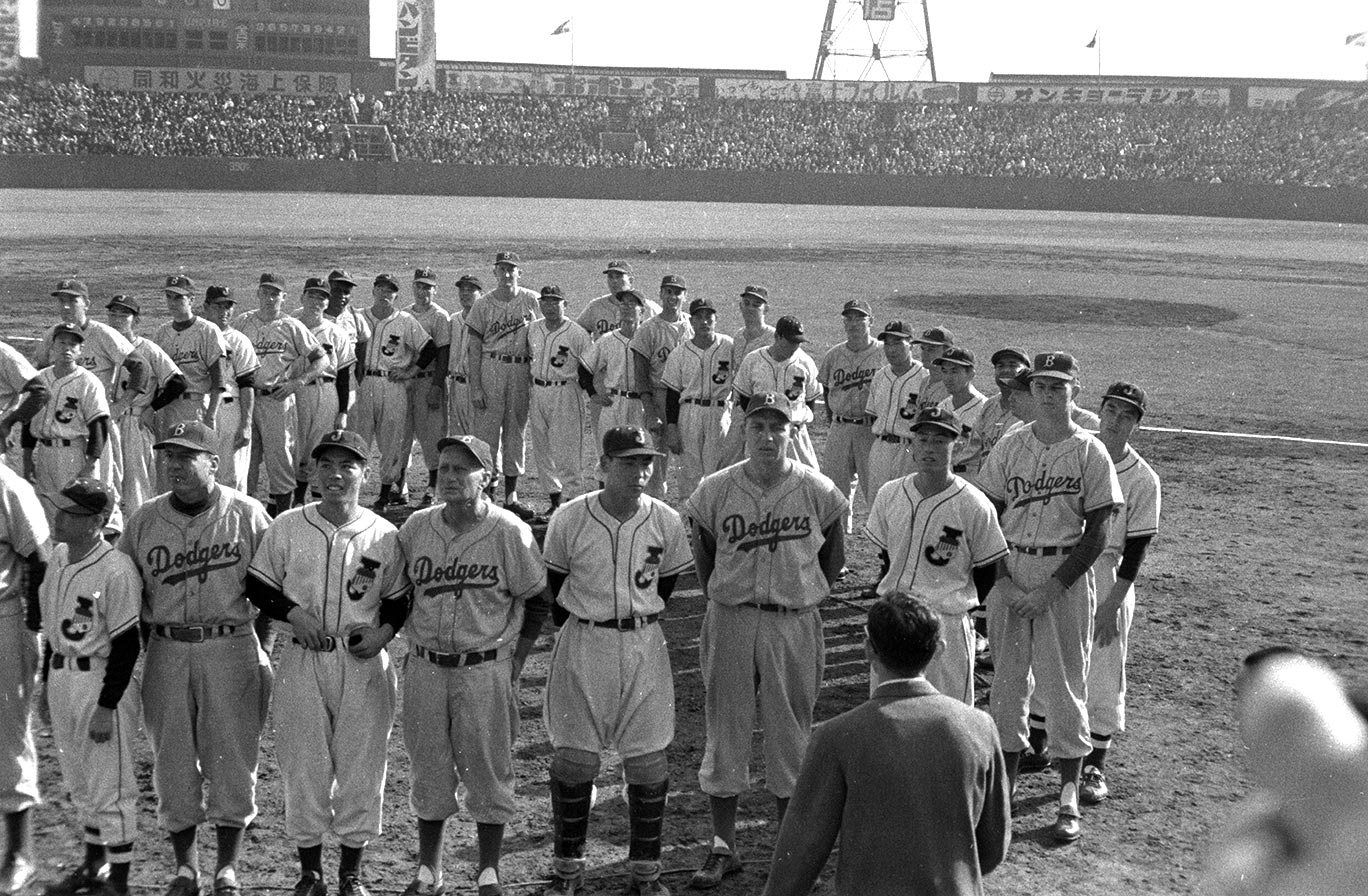
Brooklyn Dodgers and Japanese All-Stars meet on the field at Korakuen Stadium, Tokyo before a game during the 1956 Dodgers Goodwill Tour to Japan. In the front row (l-r) are Dodger Coaches Billy Herman and Jake Pitler and players Gil Hodges and Don Drysdale.
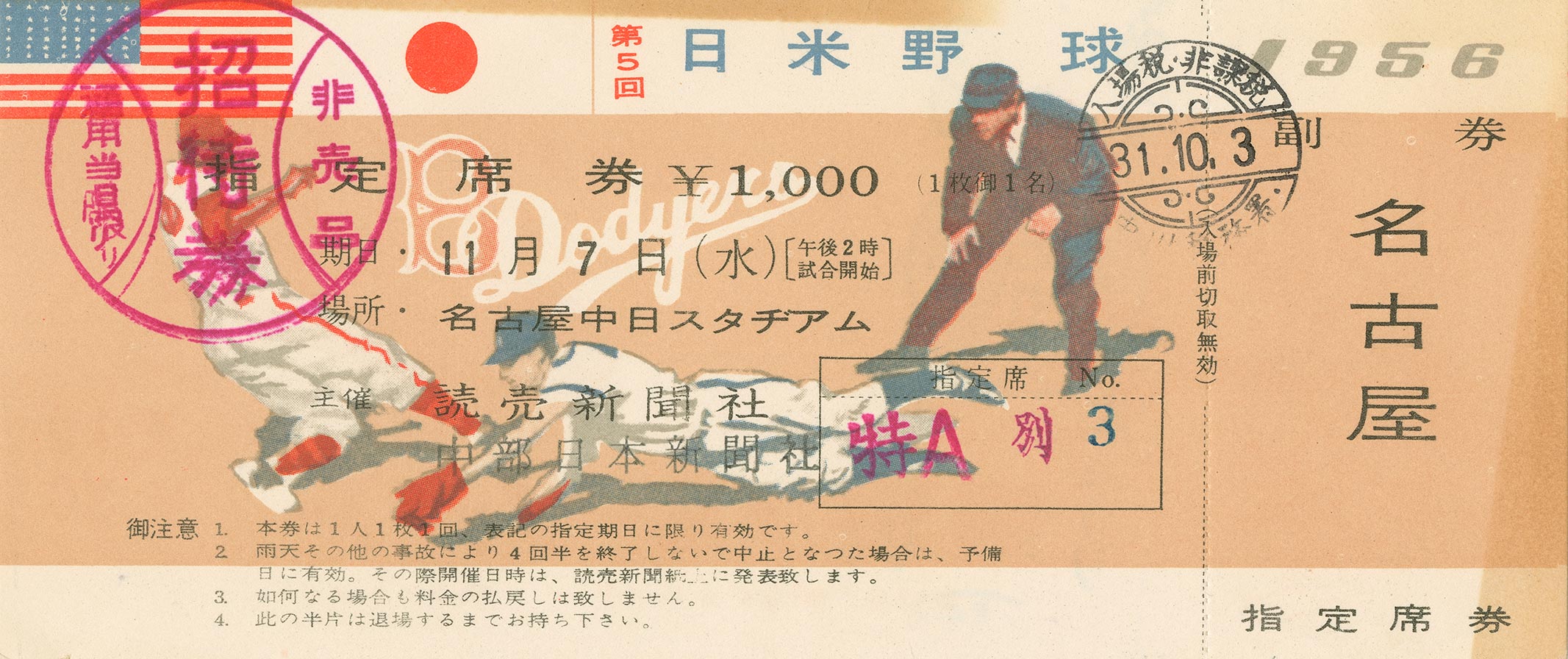
A ticket from the 1956 Dodgers Goodwill Tour to Japan when they played 19 games throughout the country against professional teams and All-Star combined teams.
Just before the tour, the Dodgers had won their second consecutive National League Pennant and then lost a seven-game World Series to the New York Yankees prior to their extended tour which included three games in Hawaii. In games throughout Japan, including an emotional visit to Hiroshima, the Dodgers played before a half million fans.
O’Malley wrote the wording for a bronze plaque that was presented to officials to be installed at the entrance to Hiroshima Stadium, where the Dodgers would play an exhibition game on November 1, 1956. The plaque read, “We dedicate this visit in memory of those baseball fans and others who here died by atomic action on August 6, 1945. May their souls rest in peace and with God’s help and man’s resolution peace will prevail forever, amen.”
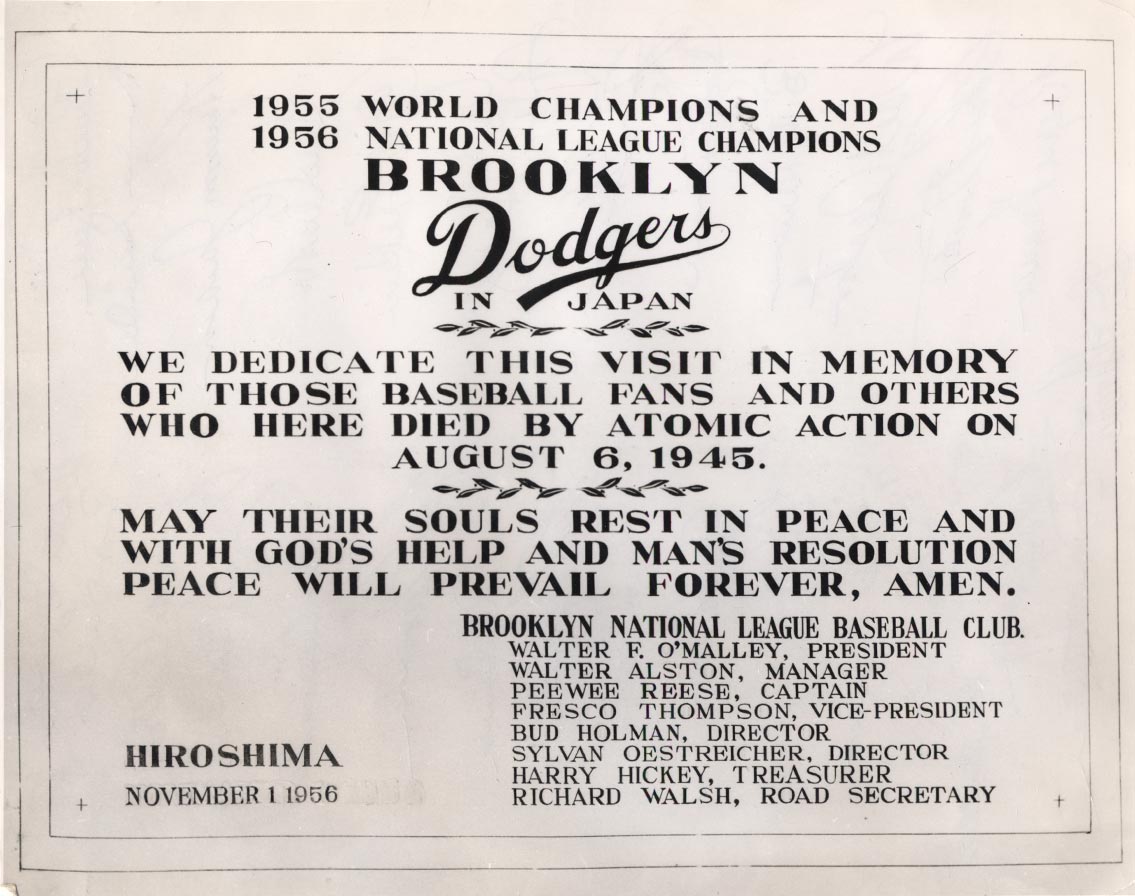
As part of the 1956 Dodgers Goodwill Tour to Japan, the Dodgers visited Hiroshima and presented a bronze plaque with wording written by Dodger President Walter O’Malley at Hiroshima Stadium on November 1. The plaque remains on display in the current Hiroshima stadium. This is a placard duplicating the wording.
Several of those who made the 1956 Goodwill Tour still hold memories of that trip including Rachel Robinson (wife of Jackie), Peter O’Malley, pitcher Fred Kipp and infielders Bob Lillis, Bob Aspromonte and Jim Gentile.
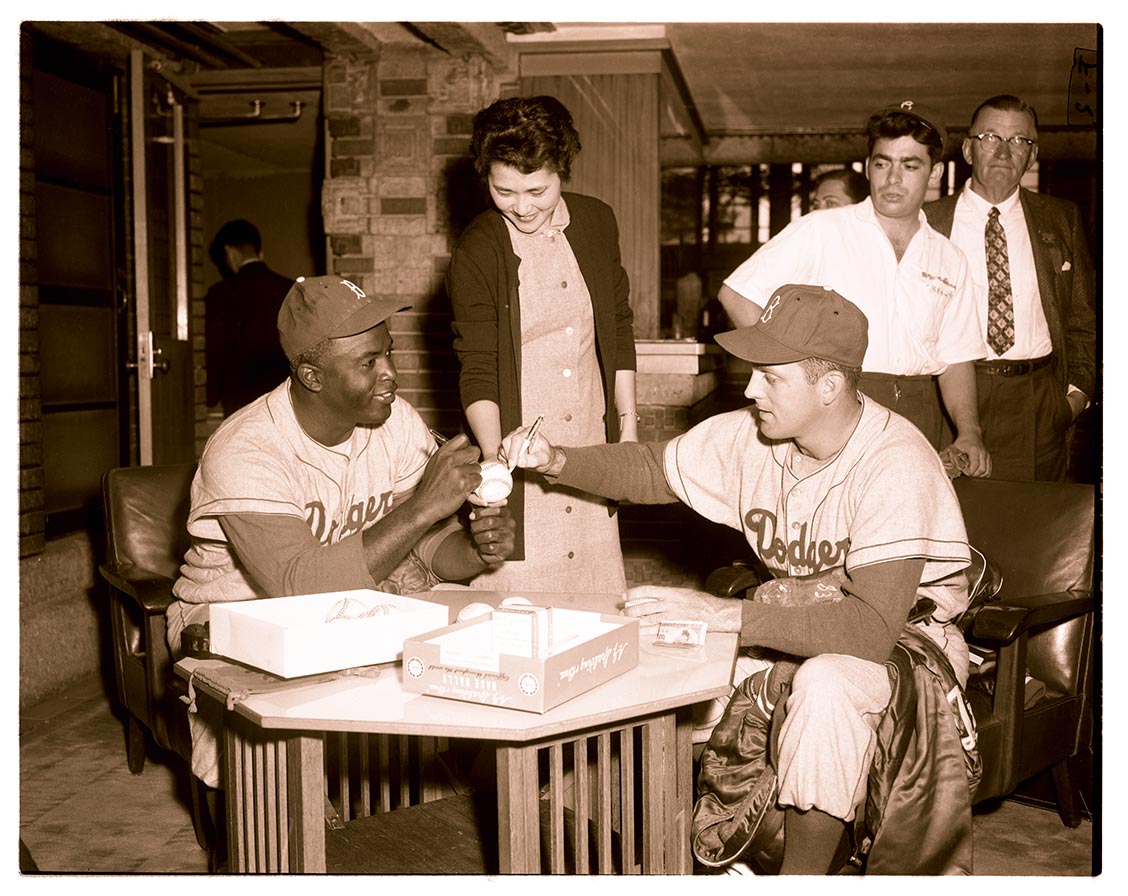
October, 1956, Dodgers Goodwill Tour to Japan. (L-R seated) Jackie Robinson; Carl Erskine; Charlie DiGiovanna, who was in charge of the Dodgers clubhouse, is standing behind Erskine.
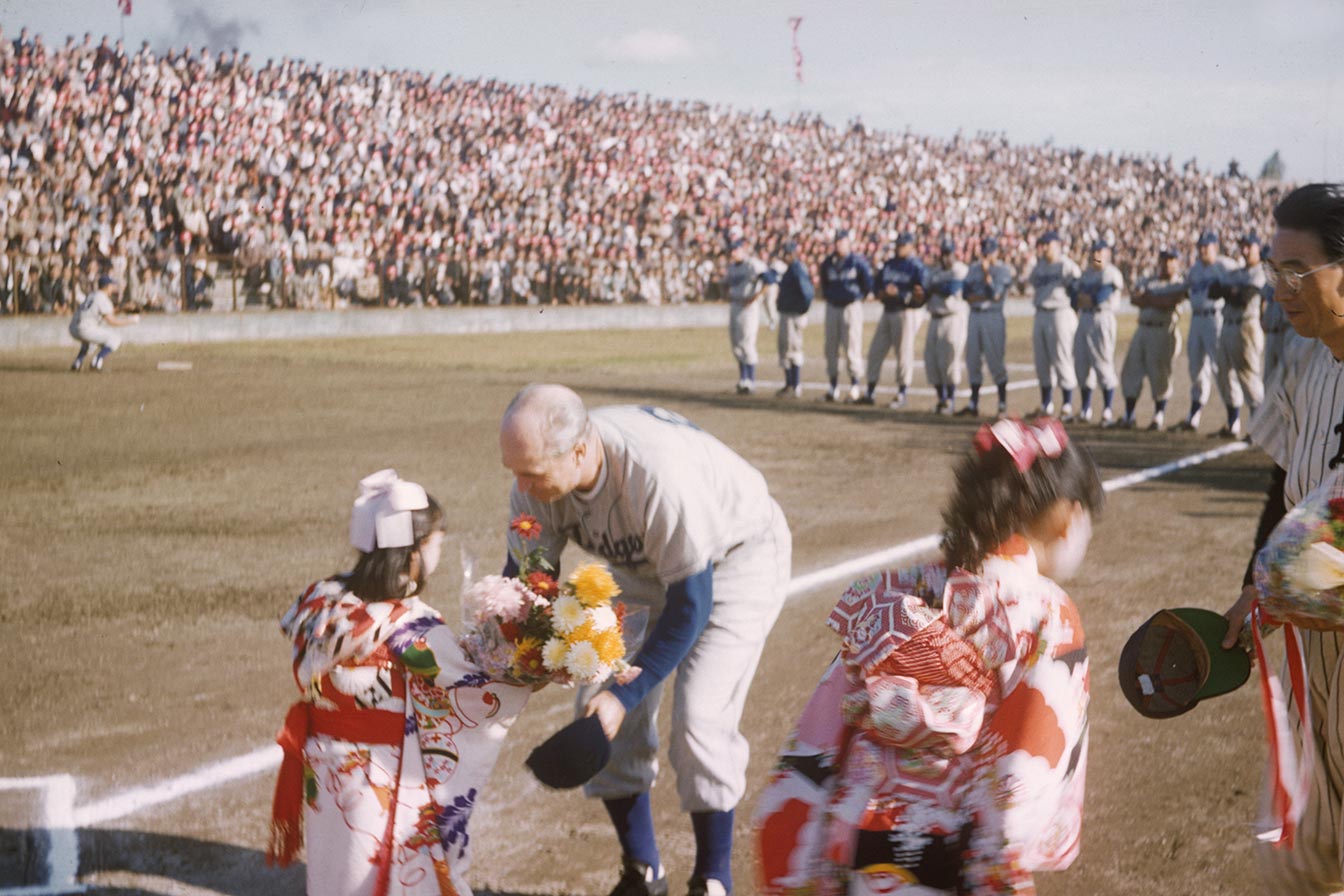
Dodger Manager Walter Alston receives a bouquet of flowers during pregame ceremonies for an exhibition game at Korakuen Stadium, Tokyo, during the 1956 Dodgers Goodwill Tour.
In 1957, Yomiuri Giants Manager Shigeru Mizuhara and two players were guests of Walter O’Malley during spring training at Dodgertown, Vero Beach, Florida. Sho Horiuchi, a right-handed pitcher, and Shigeru Fujio, a catcher, trained alongside the Dodgers. Suzuki also visited Dodgertown. Japan Baseball Hall of Famer Shoriki sent a March 26, 1957 telegram to O’Malley after their visit, “Mizuhara, Horiuchi, Fujio returned safely…deeply grateful for your unselfish kindness extended them. Boys report greatly profited from participating (in) your training camp.”
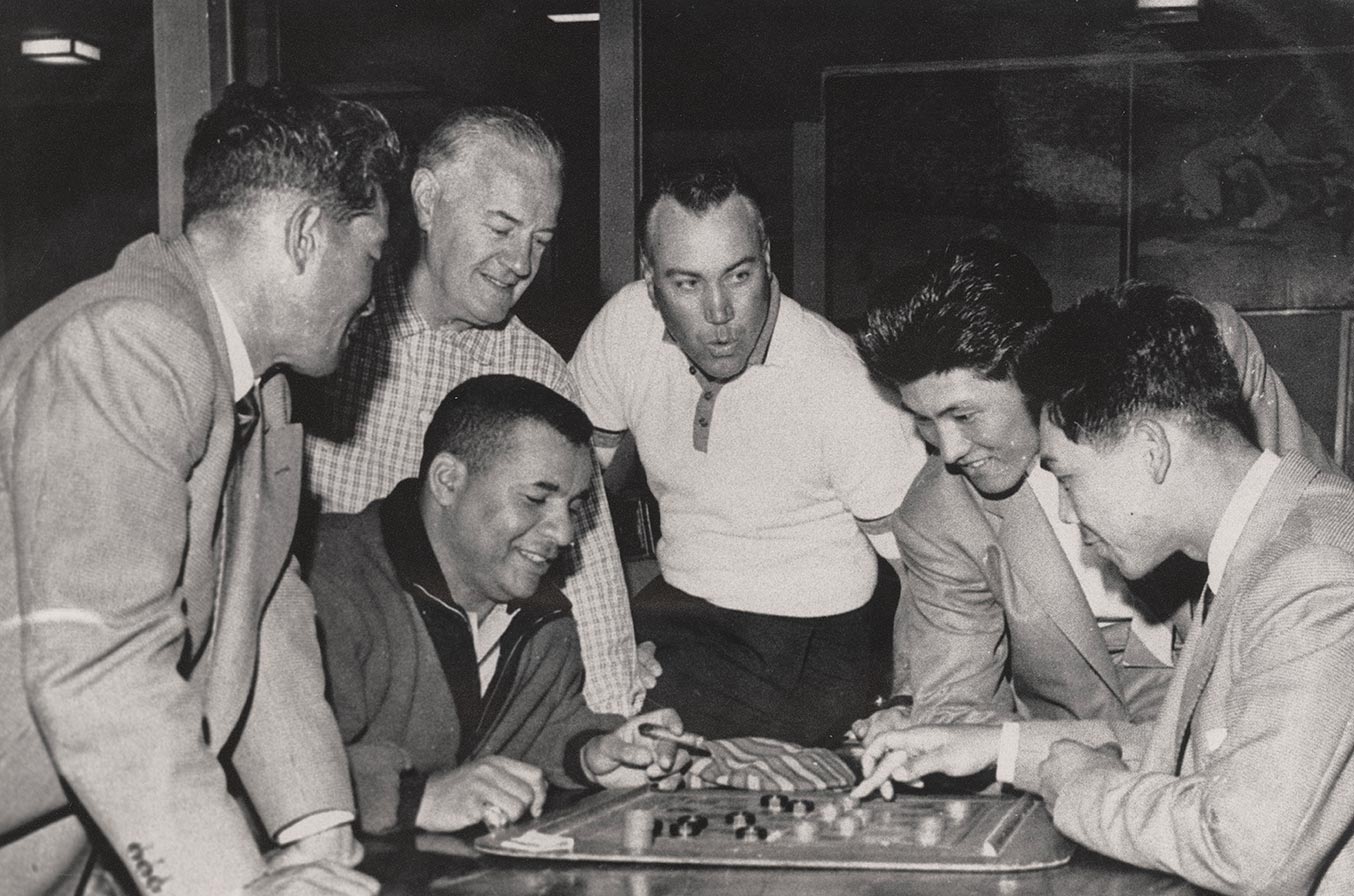
Dodgertown, Vero Beach, Florida, March 1957, Tokyo Yomiuri Giants Manager Shigeru Mizuhara (left) and two of his players (pitcher Sho Horiuchi, second from right and catcher Shigeru Fujio, far right) were invited by Dodger President Walter O’Malley to visit Dodgertown during Spring Training. After Mizuhara (l-r) are Dodger catcher Roy Campanella, Dodger Vice President Fresco Thompson and Dodger center fielder Duke Snider.
In April, 1960 continuing his international view of baseball’s future, “Walter O’Malley also told The (Los Angeles) Examiner he would like to present the first established major league Japanese star and has been exploring this step.” April 21, 1960, Bob Hunter, Los Angeles Examiner
In 1961, Yomiuri made its first team visit to Dodgertown for spring training with Japan Baseball Hall of Famers Sadaharu Oh and Shigeo Nagashima on the roster. In his first assignment after graduating from the University of Pennsylvania’s Wharton School, Peter O’Malley (Walter’s son) was responsible for the Giants’ schedule from arrival to departure. That responsibility bonded Peter with the Yomiuri Giants. In 1961, the Giants’ season was a triumphant one as they captured the Japan Series, their first Japan baseball championship since 1955. Shoriki sent Walter O’Malley this telegram: “Thanks to you, the Giants have captured Japan’s World Series, bringing into full play what they learned at Dodgertown.”
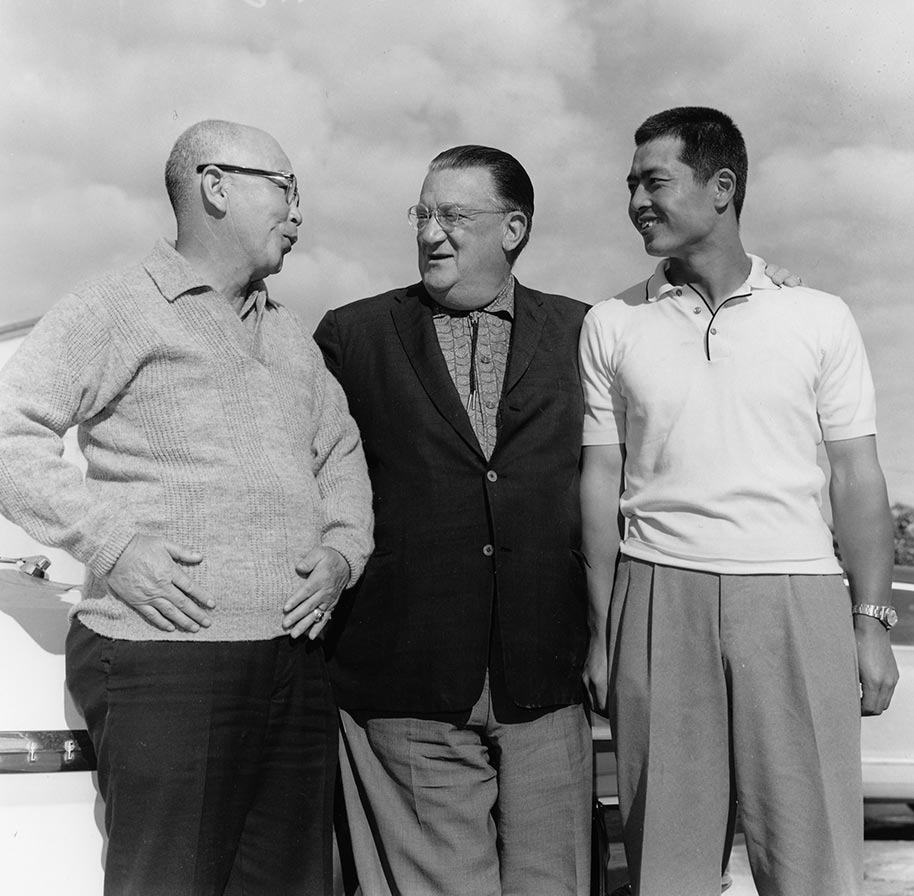
(L-R): 1961 at Dodgertown, Vero Beach, Florida. Sotaro Suzuki, Japan Baseball Hall of Fame columnist; Sadaharu Oh, Japan Baseball Hall of Famer and home run king; and Dodger President Walter O’Malley. O’Malley welcomed the entire Tokyo Yomiuri Giants team to spring training at Dodgertown.
Courtesy of University of Southern California, on behalf of the USC Specialized Libraries and Archival Collections
Oh wrote of Dodgertown, “It was really honorable and exciting for me to play baseball in such a beautiful complex and to learn the advanced Dodgers way of baseball when I visited Dodgertown for the first time for the spring training as a member of the Tokyo Giants in 1961. I can still remember the smells and the atmosphere of the wonderful facility. It was a precious memory and I will not forget for all my life.” Sadaharu Oh letter to Peter O’Malley, September 25, 2013 Oh also commented, “Up until then, defensively, Japanese baseball was reactionary, not anticipatory. For example, the Dodgers preached to anticipate the bunt and charge in with the pitch. That kind of thing was unheard of in Japan. They taught the infielders how to move in tandem with the pitcher and play a more team-oriented defense. It completely changed the way we defended.” The Wall Street Journal, Brad Lefton, May 9, 2016
In 1966, the Dodgers returned to Japan for a second Goodwill Tour of 18 games. The Giants were back at Dodgertown in the springs of 1967, 1971, 1975 and 1981, winning four Japan Series after those five visits to Dodgertown. In between, the Dodgers sent instructors to Japan to assist in development, while coaches were invited by the O’Malley family to observe at Dodgertown.
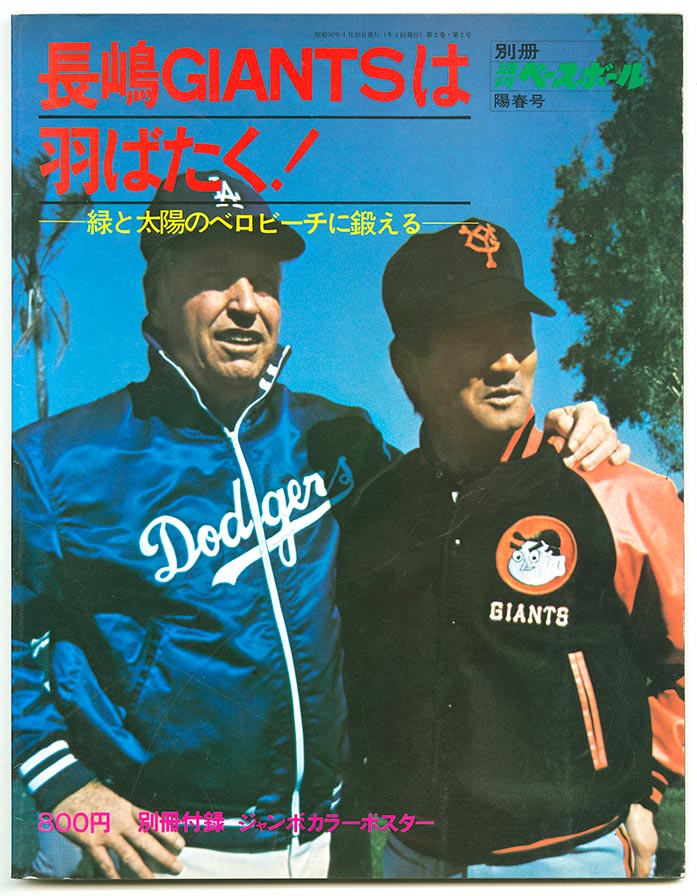
1975 Japan baseball magazine cover featuring Dodger Manager Walter Alston with first-year Tokyo Yomiuri Giants Manager Shigeo Nagashima at Dodgertown, Vero Beach, Florida that spring. Nagashima, a Japan Baseball Hall of Famer, had played for the Giants when they also visited Dodgertown in Vero Beach, Florida in 1961, 1967 and 1971. Alston was inducted into the National Baseball Hall of Fame in 1983.
During this period, Peter O’Malley traveled to Japan more than 50 times for meetings with Commissioners, League Presidents, team owners, and to attend games.
In 1988, the professional Chunichi Dragons of Nagoya trained at Dodgertown for two and a half weeks and played an exhibition game against the Dodgers. Japan-born Akihiro “Ike” Ikuhara, assistant to Dodger President Peter O’Malley, was responsible for all arrangements for Chunichi. Ikuhara was also asked to assist struggling Dragons pitcher Masahiro Yamamoto. Ikuhara encouraged Yamamoto and refined a new pitch – the screwball – that turned Yamamoto’s career around while he pitched for the Single-A Vero Beach Dodgers and set him on a path to pitch with Chunichi until he was 50. Later, Yamamoto joined Ikuhara as an inductee into the Japan Baseball Hall of Fame.
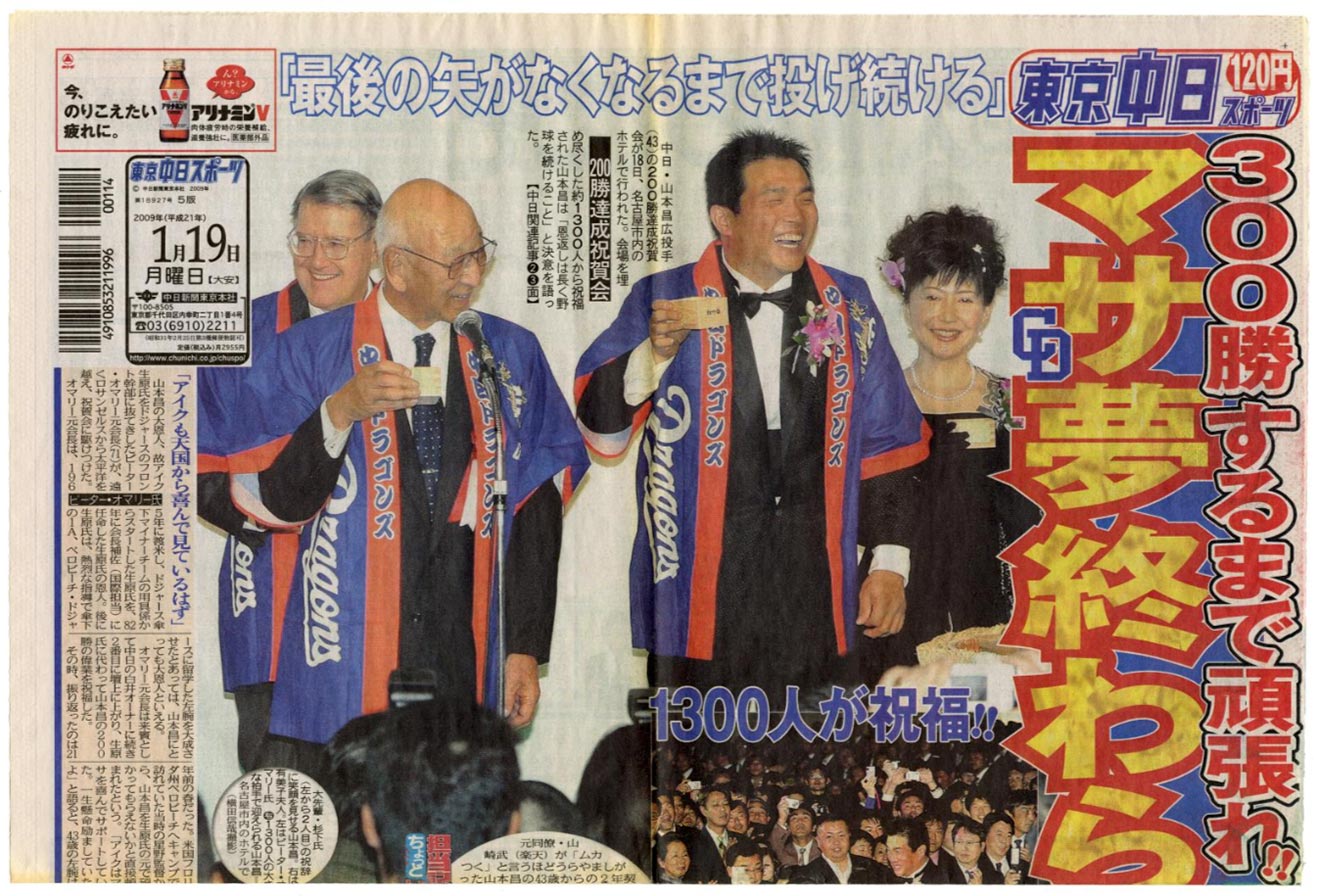
Newspaper clipping regarding the January 18, 2009 celebration in Nagoya, Japan of the Chunichi Dragons’ pitcher Masahiro Yamamoto’s 200th career victory. (L-R): Peter O’Malley; Shigeru Sugishita, Japan Hall of Fame pitcher from Chunichi and a three-time Sawamura Award winner; and Yamamoto, Japan Baseball Hall of Fame pitcher of the Dragons.
Peter, who led the Dodgers on the 1993 Friendship Series back to Japan, once said, “I have more friends in Japan than any other country in the world.”